Myths & Number Beliefs
💭 Neapolitan Smorfia: Cultural Treasure, not a Compass for the Lottery
Who hasn't dreamed of a number to play in the Lottery, perhaps after a vivid dream or witnessing an unusual event? In Italy, this practice is often linked to the Neapolitan Smorfia, a true dream dictionary that associates images, events, and people with specific numbers. It's a fascinating cultural heritage, a bridge between popular tradition and the hope of a win. But how much science is there in this connection? This article will explore the Smorfia, recognizing its cultural value but debunking its presumed effectiveness as a predictive tool in numerical games.
📜 The Smorfia: A Journey Between Dream and Tradition
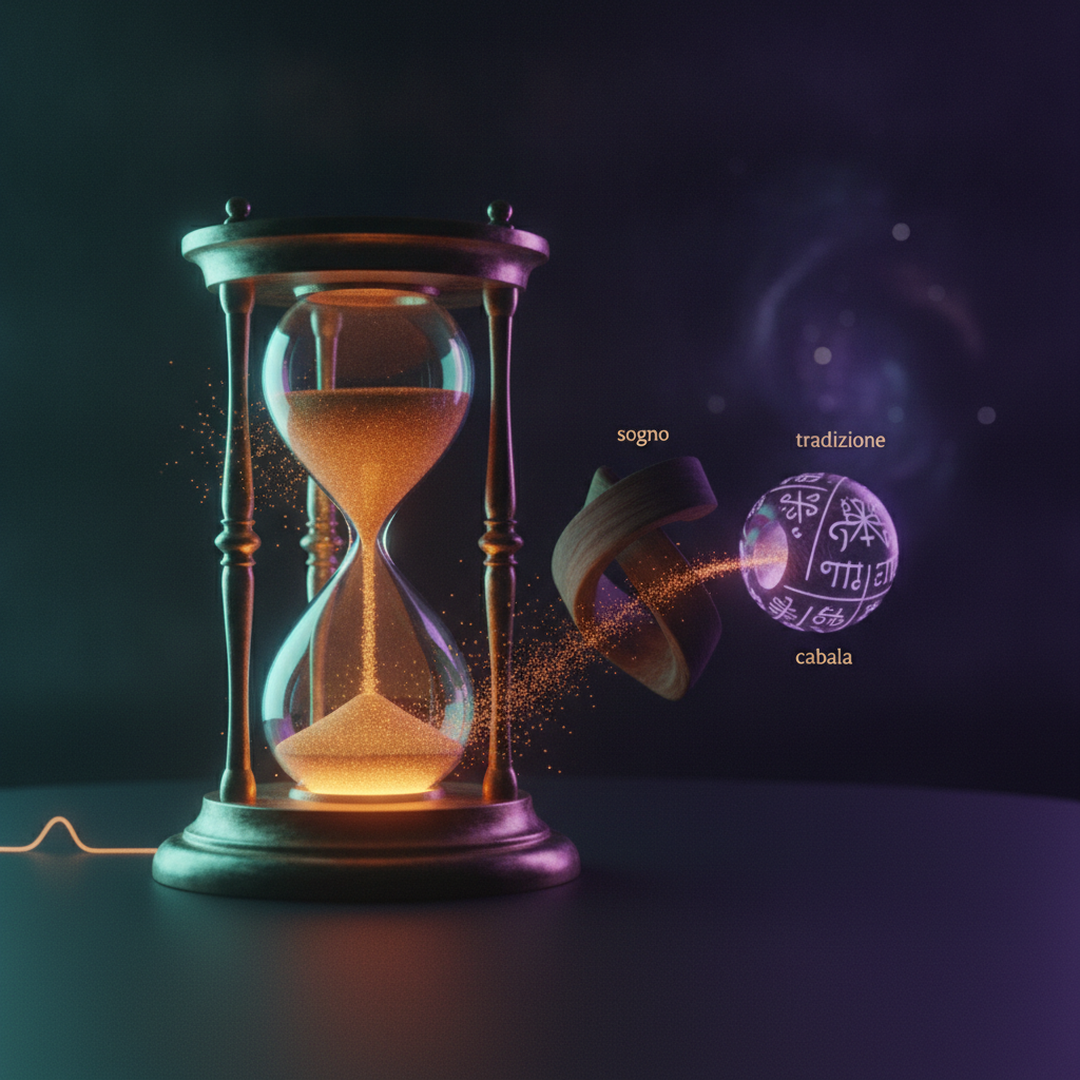
The Neapolitan Smorfia has its roots in ancient times, likely influenced by Jewish Kabbalah and Greek and Roman dream interpretation. It's a kind of popular vocabulary where every element of daily life, every dreamed image, every extraordinary event, is codified with a number from 1 to 90.
- Number 1 is associated with Italy.
- Number 2 is the little girl.
- Number 90 is fear.
And so on, in an intricate system of symbols and meanings. It's not just a list of numbers, but a narrative of popular culture, its superstitions, its hopes, and its fears. It's a secret language passed down from generation to generation, a way to make sense of what seems inexplicable.
🔮 The False Promise of Prediction
The problem arises when the Smorfia, from a cultural and personal interpretation tool, is elevated to a scientific method for predicting the outcome of numbers in the Lottery. Many people, in fact, use "dreamed" or "smorfati" numbers with the conviction that they have a higher probability of being drawn.
This is a fundamental error, driven by a misunderstanding of probabilities and chance. Numerical games like the Lottery are governed by mathematical principles that do not account for dreams, superstitions, or symbolic interpretations. Each draw is an independent event, meaning that the outcome of one draw does not influence the outcome of future draws in any way.
🎲 The Mathematics of Chance: Why the Smorfia Doesn't Work
To understand why the Smorfia cannot be a predictive tool, we need to address some basic concepts of probability.
In numerical games, every number has the same probability of being drawn. If we consider the Lottery, where 5 numbers are drawn from 90, the probability that a single specific number will be drawn is . This value, although small, is identical for all numbers, from "1" (Italy) to "90" (fear).
Imagine dreaming of a cat (number 39) and playing it. The probability that 39 will be drawn is exactly the same as 42 (coffee) or any other number. There is no mathematical mechanism that gives the number "39" an extra "boost" just because it appeared in our dream. The balls inside the urn have no memory, they don't know the Smorfia, and they are not influenced by our hopes or moods.
🧠 Confirmation Bias: Seeing What We Want to See
If the Smorfia doesn't work, why do so many people continue to believe in it and use it? One of the main reasons is confirmation bias. This is a psychological phenomenon that leads us to give more weight to information that confirms our pre-existing beliefs and to ignore information that contradicts them.
When one wins by playing a "smorfato" number, the event is remembered and celebrated as proof of the Smorfia's effectiveness. Conversely, the countless times one plays a "smorfato" number and doesn't win are forgotten or minimized. This creates an illusion of validity, strengthening the belief that the Smorfia is truly useful for winning.
Think about how many times people dream of events and associate numbers, but don't win. No one remembers those losses, but a single win, even a small one, is used to confirm the belief.
⚠ Smorfia: Heritage, not Oracle
The Neapolitan Smorfia is a precious element of our culture, a creative and suggestive way of interpreting the world and our dreams. It offers food for thought, entertainment, and a link to tradition. It is an oral and written heritage that deserves to be preserved and appreciated for what it is: a form of popular art and a testament to how humans try to make sense of the inexplicable.
However, it is fundamental to distinguish between cultural value and practical effectiveness. In numerical games, luck and probability are the only factors at play. Relying on the Smorfia to choose numbers to play means ignoring the mathematical laws that govern these games and increasing the risk of disappointment.
To fully enjoy the Smorfia, let's appreciate it for its symbolic richness and its ability to make us dream, but let's maintain the awareness that, when it comes to numbers and winnings, mathematics allows no exceptions.
Draws are independent random events: no number is more probable than another. Gambling can cause pathological dependence. Play responsibly. 18+ ADM.
Le performance passate non garantiscono risultati futuri · EV negativo per definizione · 18+ · adm.gov.it